








WHAT IS GVWR?
So what’s the deal with words like GVWR, payload capacity, and curb weight? You’ll hear us refer to these a lot when talking shop about trailers, and it’s crucial to understand the differences and meanings behind these terms and how they relate to you and your trailer.
Simply put, your Gross Vehicle Weight Rating (GVWR) is the maximum amount of weight that your trailer is rated to carry. This number INCLUDES the weight of the trailer itself and the cargo/equipment you plan to haul. But this number in itself can be misleading; if you buy a 30K GVWR trailer it does not mean you can haul 30,000 lb of equipment on it – that’s where knowledge of your trailer’s payload capacity comes in. This is the true amount of weight your trailer is safely rated to haul.
HOW DO I FIND OUT MY TRAILER’S PAYLOAD CAPACITY?
To calculate payload capacity use this simple formula:
GVWR – Weight of Trailer = Total Payload Capacity
The weight of the empty trailer is often referred to as “curb weight”. Remember to include any accessories, like toolboxes, chain trays, or spare tires in this weight.
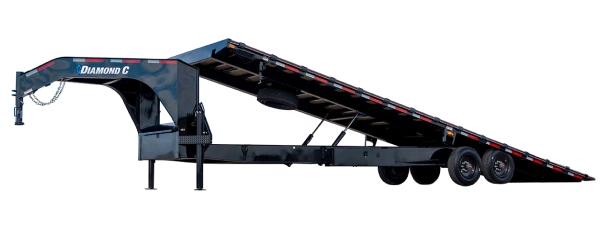
In real-life numbers, if you purchase one of our Fleetneck FMAX312 gooseneck trailers with a GVWR of 30,000 lbs and a curb weight of 9,000 lbs (approximate), to determine your maximum allowed payload capacity you would calculate:
30,000 (rated GVWR) – 9,000 (curb weight) = 21,000 lb (payload capacity)
It is very important to know your trailer’s GVWR and curb weight BEFORE hauling extreme loads to ensure you do not damage your trailer by overloading it. (If you are unsure about your trailer’s approximate curb weight, please contact your nearest Diamond C DEALER or take your trailer to a weigh station for a more accurate weight).