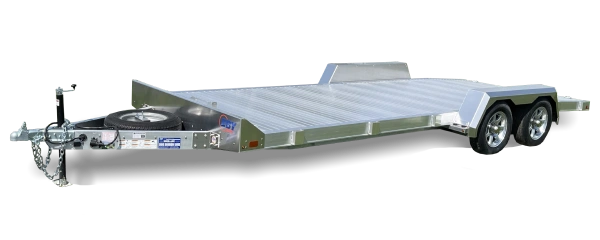
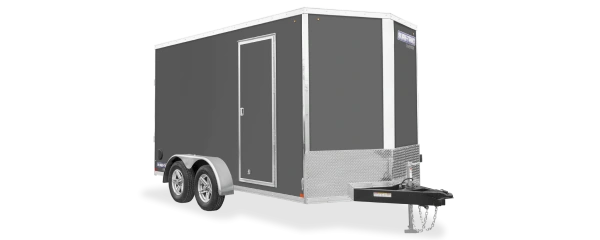
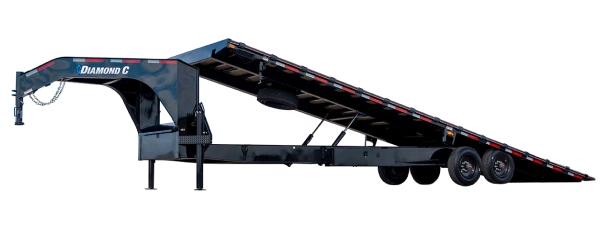
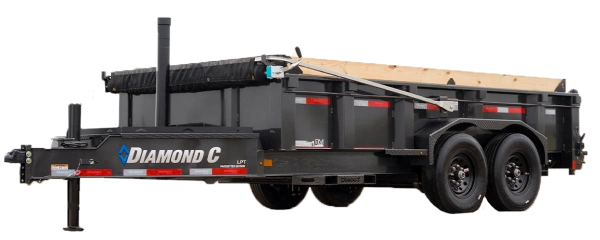









The way you load a trailer can determine how easily you can tow it. While loading, keep in mind that the tongue weight should be 10% to 15% of the overall trailer weight. Not enough weight on the trailer tongue can cause sway. To keep your trailer from swaying, place heavier cargo forward, in front of the trailer's axle. Also center the cargo left-to-right and use tie-downs to keep the load from sliding.
Trailer sway can also lead to a loss of vehicle control. When starting out with a new load on a trailer, gradually increase your speed in intervals until highway speed is reached. If the trailer does begin to sway, try adjusting the cargo and equipment accordingly. Also, make sure your trailer's tires are properly inflated. If repositioning the load doesn't reduce sway, you may need a sway control or a weight distribution system with sway control.
There are seven basic steps you should follow when loading a trailer, including parking on a level surface, loading heavy items first, following the 60/40 rule and tying down cargo. These steps are meant to be a general guide for loading a trailer correctly. Proper loading may vary based on trailer type.
- Park on a level surface
- Chock the wheels
- Distribute the weight 60/40
- Load heaviest items first
- Tie down large items
- Place lightweight cargo on top
- Hitch up and test trailer lights
Step 1: Park your trailer on a level surface
Begin by making sure your trailer is parked on a level surface. If it is not level, it may shift or even tip once the loading begins.
It is best to make sure your trailer is on level ground before you start and that there’s plenty of room for your vehicle to be hitched up.
Step 2: Chock the wheels
To further stabilize your trailer while loading it, wheel chocks are recommended.
Simply chocking the wheels will help ensure your trailer won’t move or roll while loading cargo. It will also help prevent shifting once weight is added to the trailer.
You can also hitch your trailer up to your vehicle before loading, and place the vehicle in park with emergency brake engaged to help keep the trailer stabilized.
Step 3: Make sure the weight is distributed 60/40
Before loading anything into the trailer, take a quick inventory of your cargo and roughly plan out where you’ll be placing it in the trailer.
The rule to follow is 60/40.
60% of the trailer load should be in front of the axle, and 40% should be behind. This will help ensure proper tongue weight to deter trailer sway.
Step 4: Load heaviest items first
Following the 60/40 rule when loading a trailer is vitally important for safe towing. The best way to load for proper weight distribution is to start with the largest and heaviest items.
Place heavy cargo in the center of the trailer, just forward of the axle. Then, lighter weight items can be placed around it, being distributed evenly.
Step 5: Tie down large items with straps
After loading your trailer with bulky and heavy items, secure the items to the trailer’s tie-down anchors, using rope, chain or ratchet straps.
Don’t breeze over this step!
Make sure each item is thoroughly tied down and won’t come loose while towing.
After the ratchet straps or other tie downs are properly tightened, be sure to tie off the excess, so it will not drag or get caught in the wheels.
Step 6: Place lightweight cargo on top
With heavy items loaded, you can then load the lighter cargo in open nooks or on top of the heavy cargo, if it is safe to do so.
Lightweight cargo may include small tools or supplies, or it could be leaves or yard waste. When packing small items, it is helpful to put them together in a larger container and then load them on the trailer.
You may also wish to cover the trailer load with a tarp to help protect the cargo against wind damage and rain.
Step 7: Hitch up and test your trailer lights
If your trailer is not yet hooked up to your vehicle, follow the proper steps for coupling the hitch. Make sure your towing vehicle and equipment are properly rated to tow the weight of your loaded trailer.
Also, check the tongue weight to minimize the possibility of trailer sway.