




Southeastern Trailer and Equipment

Trailer Loading

Southeastern Trailer & Equipment
/
Trailer Loading
Do I Need a CDL?

Do I Need a CDL?

A question we get a lot is, "Do I need a CDL for this trailer?" Well, the answer is very black and white, but very grey at the same time.

read more
GVWR vs Payload

GVWR vs Payload

WHAT IS GVWR? So what’s the deal with words like GVWR, payload capacity, and curb weight? You’ll hear us refer to these a lot when talking shop about trailers, and it’s crucial to understand the differences and meanings behind these terms and how they relate to you...

read more
Trailer Loading

Trailer Loading

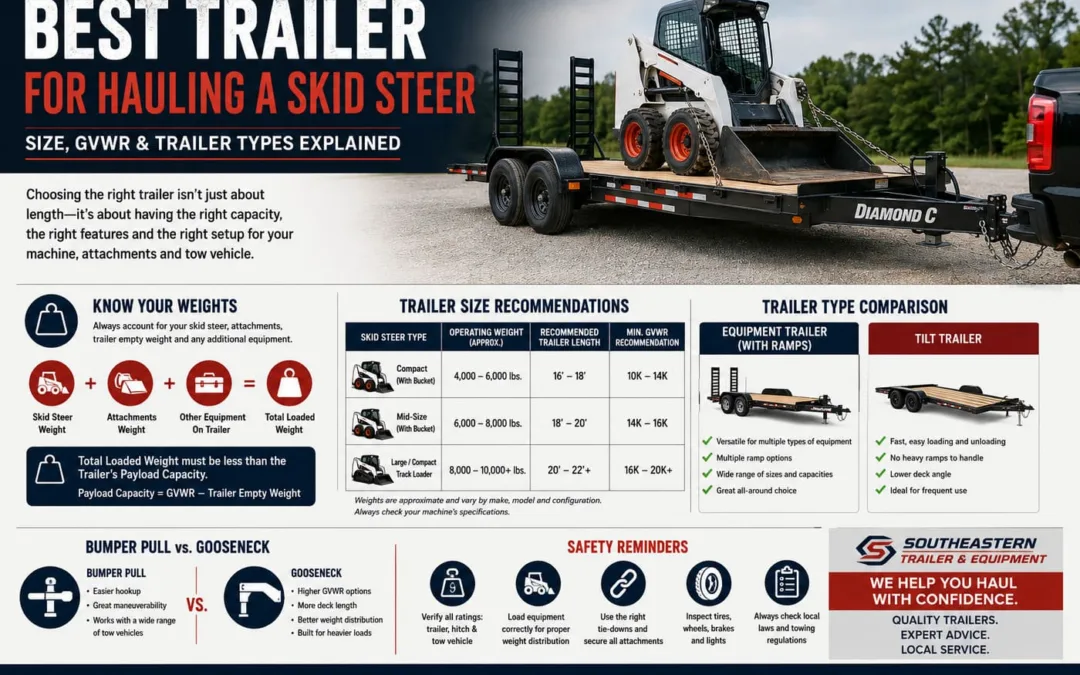
The way you load a trailer can determine how easily you can tow it. While loading, keep in mind that the tongue weight should be 10% to 15% of the overall trailer weight. Not enough weight on the trailer tongue can cause sway. To keep your trailer from swaying, place heavier cargo forward, in front of the trailer's axle. Also center the cargo left-to-right and use tie-downs to keep the load from sliding.

read more
What's the Difference Between Electric and Surge Brakes

What's the Difference Between Electric and Surge Brakes

Electric brakes are the most commonly used brake package with trailers, unless it is a boat trailer or watercraft hauling trailer, which mainly come with surge brakes because electric brakes can short out if the trailer is backed into the water. A trailer with electric brakes that will be used to back a watercraft into water should be coated to prevent corrosion, and all plug-in connections should be filled with silicone grease to prevent short outs. Electric brakes allow you to control them from the vehicle, whereas surge brakes rely on pressure being applied to the hitch to activate them.

read more

Blog Posts

Do I Need a CDL?

A question we get a lot is, "Do I need a CDL for this trailer?" Well, the answer is very black and white, but very grey at the same time.

GVWR vs Payload

WHAT IS GVWR? So what’s the deal with words like GVWR, payload capacity, and curb weight? You’ll hear us refer to these a lot when talking shop about trailers, and it’s crucial to understand the differences and meanings behind these terms and how they relate to you...

Trailer Loading

The way you load a trailer can determine how easily you can tow it. While loading, keep in mind that the tongue weight should be 10% to 15% of the overall trailer weight. Not enough weight on the trailer tongue can cause sway. To keep your trailer from swaying, place heavier cargo forward, in front of the trailer's axle. Also center the cargo left-to-right and use tie-downs to keep the load from sliding.

What's the Difference Between Electric and Surge Brakes

Electric brakes are the most commonly used brake package with trailers, unless it is a boat trailer or watercraft hauling trailer, which mainly come with surge brakes because electric brakes can short out if the trailer is backed into the water. A trailer with electric brakes that will be used to back a watercraft into water should be coated to prevent corrosion, and all plug-in connections should be filled with silicone grease to prevent short outs. Electric brakes allow you to control them from the vehicle, whereas surge brakes rely on pressure being applied to the hitch to activate them.

Contact Us

We look forward to hearing from you and helping with any inquiries or support you may need.