







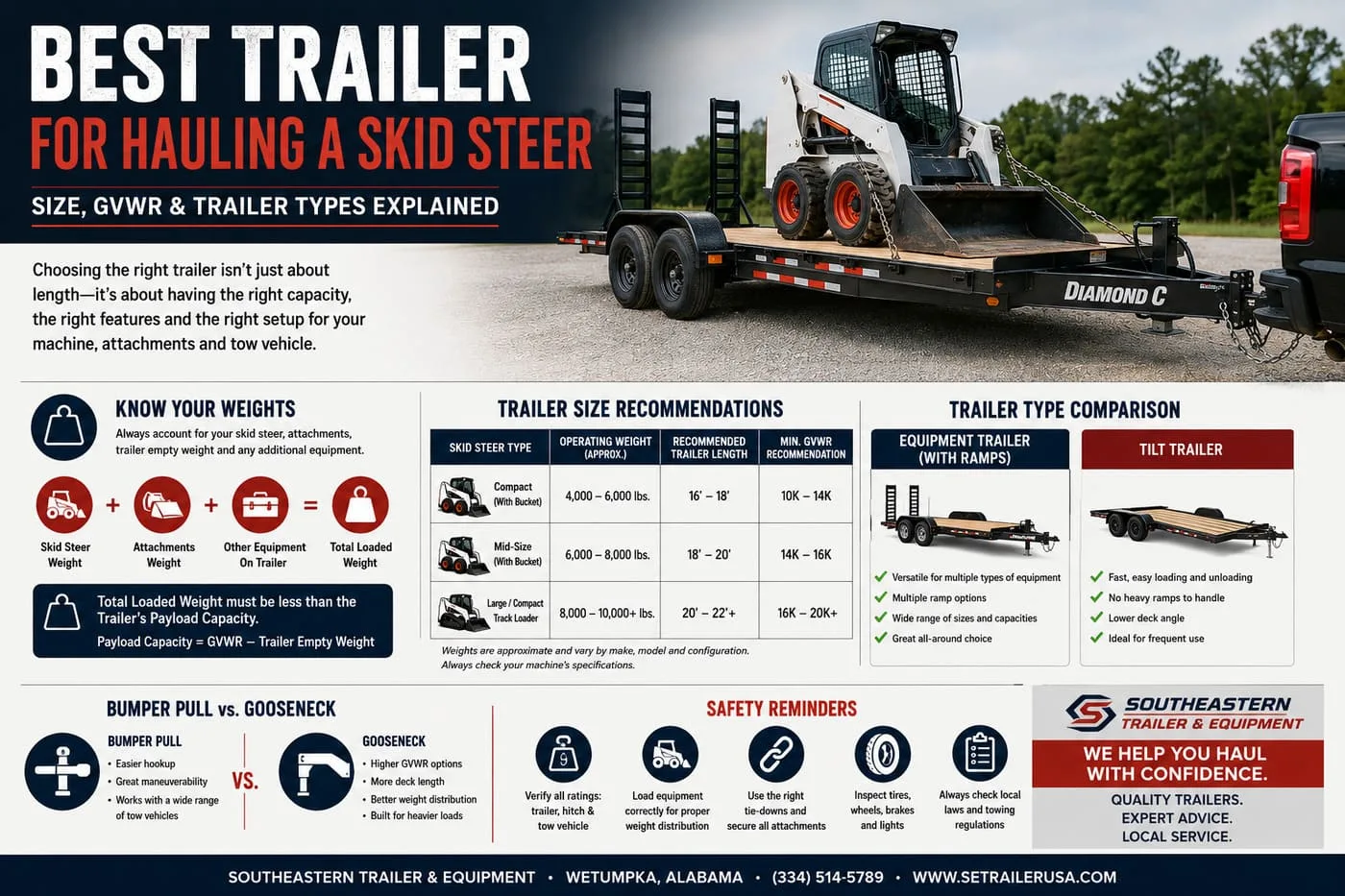
If you’re hauling a skid steer, choosing the right trailer isn’t just about whether the machine will fit. You need the right trailer length, GVWR, payload capacity and loading setup for your skid steer, attachments and tow vehicle.
At Southeastern Trailer & Equipment in Wetumpka, Alabama, one of the most important questions we ask customers is simple:
What are you hauling?
The answer helps determine whether you need a 14K equipment trailer, a heavier 16K or 20K setup, a tilt trailer or even a gooseneck.
What Size Trailer Do I Need for a Skid Steer?
For many skid steers, an 18- to 22-foot equipment trailer is a practical starting point. But trailer length alone doesn't determine whether a trailer is appropriate.
You also need to consider:
- Skid steer operating weight
- Bucket and attachment weight
- Trailer empty weight
- Trailer GVWR
- Actual payload capacity
- Axle ratings
- Deck length and width
- Ramp or tilt configuration
- Tow vehicle ratings
- How frequently you'll load and unload
A compact skid steer with a bucket may require a completely different setup from a large compact track loader carrying a grapple, forks and other attachments.
The best trailer is the one properly matched to your actual machine and how you use it.
GVWR vs. Payload Capacity: Know the Difference
This is one of the most important things to understand when shopping for a skid steer trailer.
GVWR, or Gross Vehicle Weight Rating, is the maximum allowable loaded weight of the trailer.
That does not mean a 14,000-pound GVWR trailer can carry 14,000 pounds of equipment.
The trailer itself has weight.
A simplified way of looking at payload is:
GVWR − Trailer Empty Weight = Potential Payload Capacity
For example, if a trailer has a 14,000-lb. GVWR and weighs 4,000 lbs. empty, the theoretical difference is approximately 10,000 lbs. before considering other applicable ratings, limits and requirements.
Now add your skid steer, bucket, grapple, forks, tools or anything else riding on the trailer.
Those pounds add up quickly.
SHOPPING TIP: Don't tell your trailer dealer only, “I need a trailer for a skid steer.” Bring the skid steer's make, model and operating weight along with a list of the attachments you normally haul.
Is a 14K Equipment Trailer Enough for a Skid Steer?
A 14K equipment trailer is a popular option for many compact and mid-size skid steers, but whether it works for your machine depends on the trailer's actual payload capacity and the total loaded weight.
Suppose your skid steer weighs 8,000 pounds and you're carrying 1,500 pounds of attachments. That's already approximately 9,500 pounds of cargo.
That's why you should never select a trailer based on the “14K” designation alone.
For larger machines, compact track loaders, multiple attachments or heavier commercial use, you may need to consider 16K, 20K or higher-capacity equipment trailers.
When should you consider a heavier trailer?
A higher-capacity trailer may make sense if you:
- Own a heavier skid steer or compact track loader
- Regularly carry multiple attachments
- Haul additional equipment and tools
- Tow equipment commercially
- Expect to purchase a larger machine in the future
- Need more usable payload than a 14K trailer provides
Buying exactly enough trailer for today's machine can sometimes mean buying another trailer when you upgrade equipment.
Equipment Trailer With Ramps vs. Tilt Trailer
Once you've established the capacity you need, think about how often you load and unload your skid steer.
Traditional Equipment Trailer With Ramps
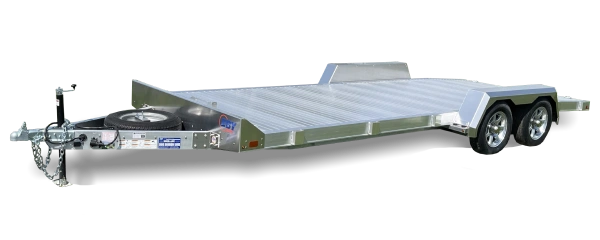
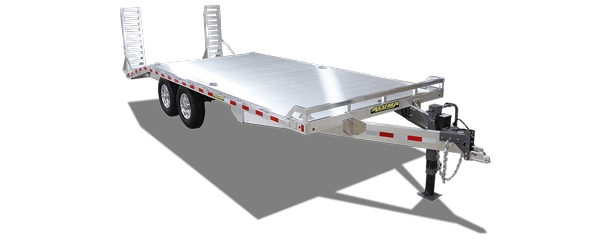
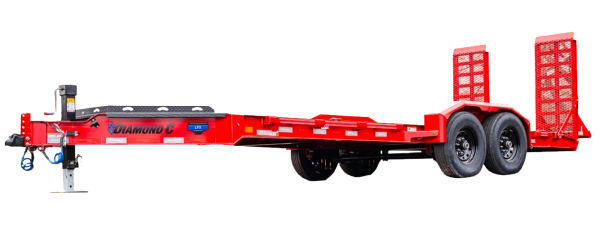
A conventional equipment trailer is an excellent all-around choice, especially if you haul different types of machinery.
Depending on the model and configuration, benefits can include:
- Multiple ramp options
- Wide variety of lengths and GVWRs
- Ability to haul different types of equipment
- Space for attachments
- Familiar loading and unloading setup
For contractors, farmers and property owners who need one trailer to perform several jobs, a traditional equipment trailer can offer excellent versatility.
Tilt Trailer
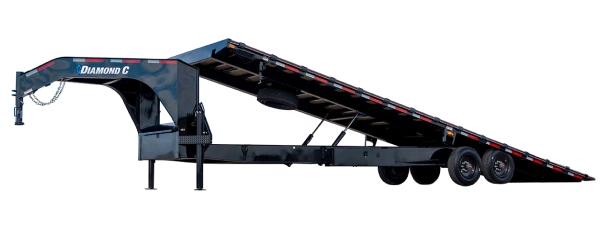
If you're loading and unloading equipment several times a day, a tilt trailer deserves serious consideration.
Rather than handling traditional ramps, the trailer deck tilts to create the loading angle.
Depending on the model, advantages can include:
- Faster loading and unloading
- Less ramp handling
- Convenient loading angle
- Clean deck design
- Excellent setup for frequent equipment use
For someone who unloads a skid steer once at a jobsite and reloads it at the end of the day, either design may work well.
For an operator loading and unloading repeatedly throughout the day, the convenience of a tilt trailer can become much more valuable.
Don't Forget About Your Skid Steer Attachments
One of the easiest mistakes to make is calculating the weight of the skid steer but forgetting everything traveling with it.
Think about what you actually take to a job:
- Standard bucket
- Grapple
- Pallet forks
- Auger
- Brush cutter
- Trencher
- Other attachments
- Chains, binders and tools
Attachments affect both weight and deck space.
The shortest trailer capable of holding your skid steer may therefore not be the best trailer for your business.
Extra deck length can provide more flexibility for positioning the machine and carrying attachments while still maintaining proper load placement.
What About Compact Track Loaders?
Compact track loaders and skid steers are often discussed together, but their weights can be substantially different depending on the machines being compared.
Never assume the trailer that worked for your previous skid steer will automatically work for your new compact track loader.
Check the manufacturer's specifications for your exact make, model and configuration, then calculate the additional weight of the attachments you'll be carrying.
Bumper Pull vs. Gooseneck for a Skid Steer
For many skid steer owners, a properly rated bumper-pull equipment trailer provides the capacity and versatility they need.
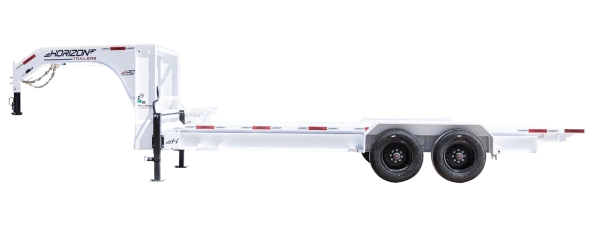
As machines become heavier or hauling requirements increase, a gooseneck trailer may be worth considering.
Bumper Pull
A bumper-pull may make sense when you want:
- A straightforward towing setup
- Good maneuverability
- Versatility for different loads
- A trailer compatible with an appropriately equipped conventional tow setup
Gooseneck
A gooseneck becomes especially attractive for heavier-duty hauling.
Depending on the trailer, advantages may include:
- Higher available GVWR configurations
- Longer deck options
- Additional room for attachments
- Heavy-duty commercial configurations
- Greater capacity options
The trailer is only half of the equation. Your truck must also be properly rated and equipped to tow the loaded trailer.
What Size Trailer Should You Buy?
There isn't one trailer size that's right for every skid steer.
Instead, start with these questions:
- What is the make and model of my skid steer?
- What is its operating weight?
- What attachments will I normally carry?
- What do those attachments weigh?
- How much deck space will I need?
- How often will I load and unload?
- Would I rather use ramps or a tilt deck?
- What vehicle will tow the trailer?
- What are my truck's applicable towing and payload ratings?
- Am I likely to buy larger equipment in the next few years?
Bring this information with you when you shop.
A knowledgeable trailer dealer can then help you narrow down the appropriate GVWR, payload capacity, trailer length and configuration.
Safety Matters
Before towing your skid steer, always verify the ratings and requirements for your particular truck, trailer and equipment.
Make sure your equipment is properly positioned and secured, and inspect items such as:
- Tires and wheels
- Trailer brakes
- Lights
- Coupler or gooseneck connection
- Safety chains
- Breakaway system
- Tie-down points
- Chains and binders
Also follow the trailer, equipment and tow-vehicle manufacturers' instructions and all applicable federal, state and local requirements.
Find the Right Skid Steer Trailer in Alabama
At Southeastern Trailer & Equipment, we're not interested in simply putting you in whatever trailer happens to be sitting closest to the front door.
We want to know what you're hauling, what it weighs, what you're pulling it with and how you'll use the trailer.
Located in Wetumpka, Alabama, Southeastern Trailer & Equipment serves contractors, landscapers, farmers, equipment operators and property owners throughout Alabama and the surrounding Southeast.
We carry equipment trailers, tilt trailers, dump trailers, gooseneck trailers, deckover trailers, utility trailers and other hauling solutions, along with trailer parts and service.
Need a Trailer for Your Skid Steer?
Browse our Equipment Trailer Inventory or contact Southeastern Trailer & Equipment and tell us what you're hauling.
We'll help you compare trailer size, GVWR, payload capacity, deck length and loading options to find the right setup for your equipment and your work.
Southeastern Trailer & Equipment
Wetumpka, Alabama