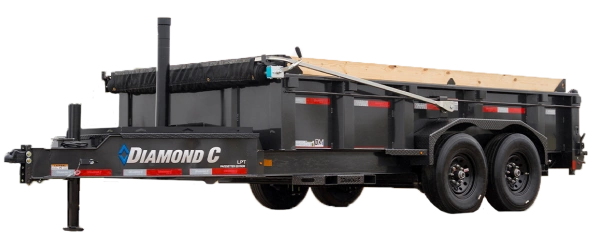









Shopping for a dump trailer? One of the first decisions you'll make is choosing the right size. Whether you're hauling gravel, dirt, mulch, construction debris, landscaping materials or equipment, the right dump trailer can save time, reduce unnecessary trips and make your workday more productive.
But bigger isn't always better. A trailer that's too small can limit your hauling capacity, while a trailer that's larger than you need may add unnecessary weight and require a more capable tow vehicle.
At Southeastern Trailer & Equipment in Wetumpka, Alabama, we help contractors, landscapers, farmers and property owners find trailers that fit their equipment, their work and their budget.
Let's compare some popular dump trailer sizes and explain what you need to know before buying.
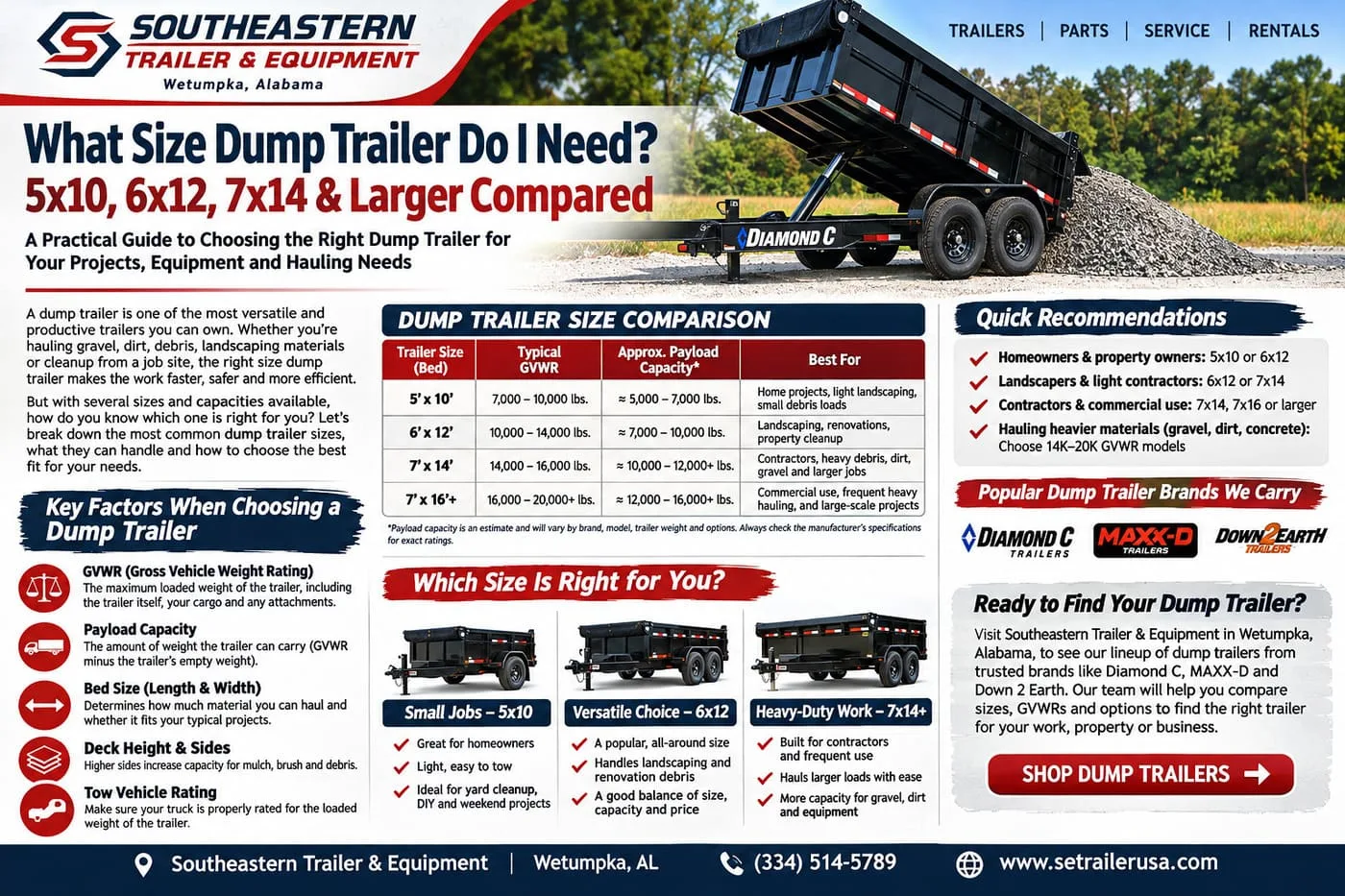
Dump Trailer Size Comparison: 5x10 vs. 6x12 vs. 7x14 vs. 7x16
Different sizes work better for different jobs. Here's a quick comparison.
| Trailer Size | Common Uses | Best Suited For |
|---|---|---|
| 5x10 | Mulch, yard debris, small renovation projects | Homeowners and smaller property maintenance jobs |
| 6x12 | Landscaping materials, dirt, debris, general hauling | Landscapers, property owners and small contractors |
| 7x14 | Construction debris, gravel, equipment and larger loads | Contractors, landscapers and frequent commercial users |
| 7x16 and larger | Bulky materials, large cleanup jobs and equipment | Larger operations needing more deck space and volume |
These are general applications, not guaranteed hauling capacities. Actual payload depends on each trailer's GVWR, empty weight, axle ratings and configuration.
5x10 Dump Trailers: Compact and Convenient
A 5x10 dump trailer is a practical option for homeowners, small property maintenance businesses and people who need to move materials without investing in a larger commercial trailer.
Common uses include:
- Yard cleanup and landscaping debris
- Mulch and compost
- Small remodeling projects
- Brush and tree limbs
- General property maintenance
A compact dump trailer is often easier to store and maneuver in tighter spaces.
However, smaller trailers have less deck space and bed volume. If you frequently haul large quantities of material, you may find yourself making more trips than necessary.
Our advice: A 5x10 can be an excellent choice for occasional use and smaller jobs, provided its rated payload meets your needs.
6x12 Dump Trailers: A Versatile Middle Ground
For many buyers, a 6x12 dump trailer offers a useful balance between manageable size and hauling versatility.
It's a popular size to consider for landscaping businesses, small contractors and property owners who regularly haul materials.
Common uses include:
- Mulch and landscaping rock
- Soil and gravel
- Construction debris
- Brush and property cleanup
- Farm and property maintenance
A 6x12 trailer offers more bed space than a 5x10 without requiring the footprint of a larger trailer.
For someone starting a landscaping or property maintenance business, this size is worth comparing against a 7x14.
7x14 Dump Trailers: A Popular Contractor Choice
If you're hauling materials regularly, a 7x14 dump trailer deserves serious consideration.
The additional width and length provide more room for bulky loads, and many models are available in heavy-duty configurations.
Common uses include:
- Construction and demolition debris
- Gravel and dirt
- Landscaping materials
- Roofing debris
- Farm and property maintenance
- Compatible compact equipment, when properly rated and equipped
For contractors who use a dump trailer several times a week, the additional space can improve efficiency.
But remember: a larger bed does not automatically mean a higher payload capacity.
A 7x14 trailer with a particular GVWR may carry less weight than you expect once its empty weight is subtracted.
7x16 and Larger Dump Trailers: More Room for Bigger Jobs
Larger dump trailers can be a good investment for businesses regularly hauling bulky materials or handling substantial cleanup and construction work.
The longer bed provides more usable space, especially when transporting materials that take up a lot of room without necessarily being extremely heavy.
Larger trailers may also offer heavy-duty configurations and features suitable for demanding commercial applications.
Before buying, consider whether your truck can safely handle the loaded trailer and whether you have enough space to maneuver and store it.
What Does 14K GVWR Mean on a Dump Trailer?
One of the biggest mistakes buyers make is assuming a 14K dump trailer can haul 14,000 pounds of material.
That's not what the rating means.
GVWR stands for Gross Vehicle Weight Rating. It represents the maximum allowable loaded weight of the trailer.
For example:
- Trailer GVWR: 14,000 pounds
- Trailer empty weight: 4,500 pounds
- Theoretical payload difference: 9,500 pounds
That 9,500-pound figure is only an example. Actual rated payload may be lower because of other component, manufacturer or legal limitations.
Always check the manufacturer's specifications and the trailer's identification labels.
Why Payload Matters When Hauling Gravel and Dirt
Gravel, soil and other dense materials can weigh much more than buyers expect.
Approximate material weights vary with moisture, composition and compaction, but a cubic yard of gravel can weigh around 2,400–3,000 pounds or more.
That means three cubic yards of gravel could weigh approximately 7,200–9,000 pounds before considering anything else in the trailer.
A large dump bed can physically hold more material than the trailer is legally or safely rated to transport.
Never judge hauling capacity by how full the trailer looks.
Steel Sides, Side Height and Dump Bed Volume
Two trailers with the same bed dimensions may have very different hauling characteristics.
Side height affects how much loose material the trailer can contain. Taller sides can be useful for brush, mulch and other bulky loads.
But taller sides don't increase the trailer's weight rating.
If you primarily haul dense materials such as gravel, dirt or crushed stone, payload capacity may be more important than maximum bed volume.
If you frequently haul brush, tree limbs or demolition debris, additional bed volume may be especially useful.
Should You Buy a Bumper-Pull or Gooseneck Dump Trailer?
For many homeowners, landscapers and contractors, a bumper-pull dump trailer provides the capacity and versatility they need.
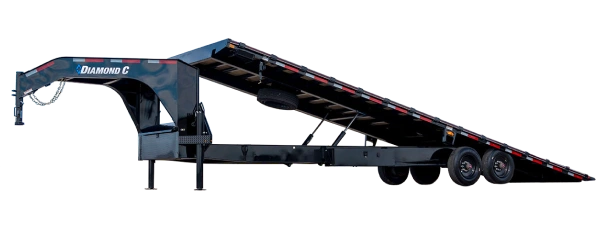
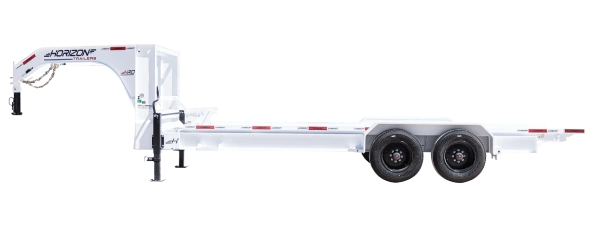
A gooseneck dump trailer may be worth considering for larger or heavier commercial hauling requirements.
Bumper-Pull Dump Trailers
Advantages may include:
- Straightforward hitch setup
- Broad selection of sizes
- Versatility for residential and commercial use
- Compatibility with appropriately rated conventional towing setups
Gooseneck Dump Trailers
Advantages may include:
- Higher available capacity configurations
- Heavy-duty commercial designs
- Different weight distribution characteristics
- Larger trailer options
Whichever style you choose, your tow vehicle, hitch, tires, brakes and other components must be properly rated for the complete setup.
Five Questions to Ask Before Buying a Dump Trailer
Before you shop, answer these questions:
- What will I haul most often? Gravel, dirt, mulch, debris and equipment all have different requirements.
- How much weight will I carry? Calculate realistic load weights rather than estimating by bed size.
- How often will I use the trailer? Occasional homeowner use may call for a different setup than daily commercial hauling.
- What truck will tow it? Check your truck's towing, payload, hitch and other applicable ratings.
- Will my needs grow? A trailer that works today should ideally continue to serve your needs as your projects or business expand.
Which Dump Trailer Size Is Best?
Here's our general recommendation:
- For homeowners and smaller property maintenance jobs: Start by comparing 5x10 and 6x12 dump trailers.
- For landscapers and small contractors: Compare 6x12 and 7x14 trailers based on your typical materials and loads.
- For frequent commercial hauling: Consider 7x14, 7x16 and larger configurations with appropriate payload ratings.
- For heavier-duty operations: Explore higher-capacity dump trailers and gooseneck options when appropriate.
The right choice depends on more than bed dimensions. It depends on the combination of cargo weight, trailer capacity, towing vehicle and intended use.
Shop Dump Trailers in Wetumpka, Alabama
At Southeastern Trailer & Equipment, we understand that buying a dump trailer is an investment.
Whether you're expanding your landscaping business, hauling materials to construction sites or maintaining your property, we want to help you choose equipment that makes your work easier.
Located in Wetumpka, Alabama, we serve customers throughout Alabama and the Florida Panhandle.
We offer a variety of trailer options, along with parts, service and knowledgeable assistance.
Ready to Find Your Next Dump Trailer?
Browse our current dump trailer inventory at www.setrailerusa.com or contact Southeastern Trailer & Equipment to discuss your hauling needs.
Tell us what you're hauling, how much it weighs and what truck you're using.
We'll help you compare available dump trailer sizes, capacities and features so you can find the right fit.
Southeastern Trailer & Equipment
Wetumpka, Alabama
www.setrailerusa.com